School bus accident: who is responsible and what the school must do first
A school bus accident protocol should be written before it is needed. Here is the first-hour checklist, how to tell parents, how school responsibility works for owned and hired buses, and the records to keep.
On this page
- The first 60 minutes: a step-by-step list
- Telling parents: who, how, what to say
- Who is responsible after a school bus accident: school, bus owner, driver
- Owned bus versus hired bus
- Documents and insurance to have ready
- Knowing exactly who was on the bus
- After the incident: review and reporting
- Prevention checklist
- What to do next
- Questions people ask
Last reviewed: November 2026
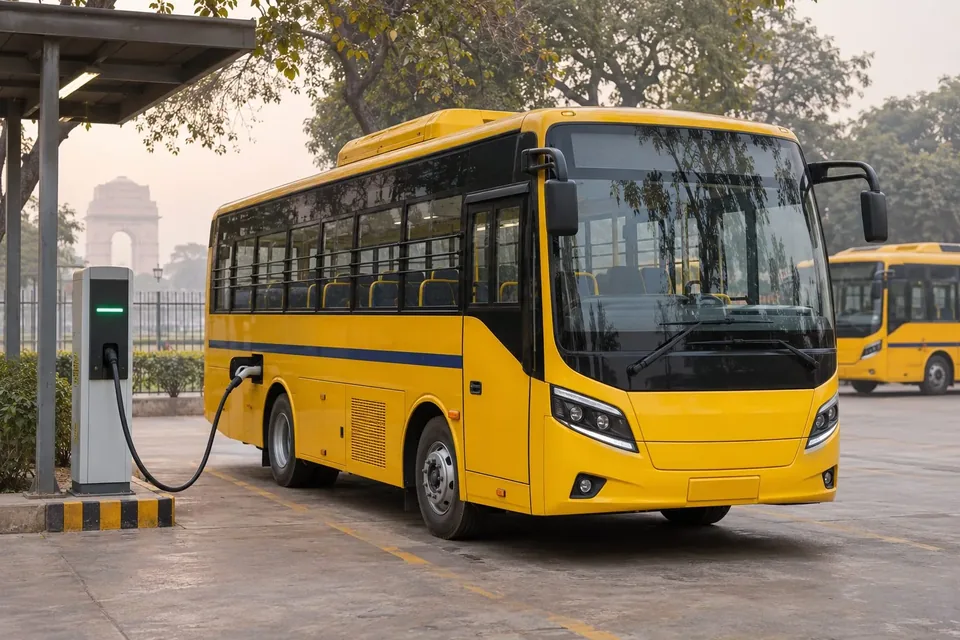
After a school bus accident, school responsibility starts at once: get injured children medical help, account for every child, inform the police and parents, and keep accurate records. The driver has legal duties under the Motor Vehicles Act, the bus owner answers for the vehicle and its insurance, and the Ministry of Education's 2021 guidelines hold school management accountable for children's safety in school transport, whether the bus is owned or hired.
Key points
- The first hour after an injury, the "golden hour", matters most. Medical help comes first.
- A driver must help secure medical attention and report the accident to the police within 24 hours.
- One named person should speak to parents, with facts only.
- Hiring a bus moves ownership duties to the contractor, not the school's accountability for the children.
- Know exactly who was on the bus. A boarding list from last month is not good enough.
The first 60 minutes: a step-by-step list
Write this into your transport policy, train the driver, attendant and office staff on it, and keep a printed copy in every bus.
On the bus (driver and attendant)
- Stop safely, switch off the engine and turn on hazard lights.
- Check for immediate danger: fire, fuel leak, traffic. Move children off the bus only if staying on is more dangerous.
- Call 112 for police and ambulance if anyone is hurt.
- Give first aid within your training. Do not move a child who may have a neck or back injury unless there is danger.
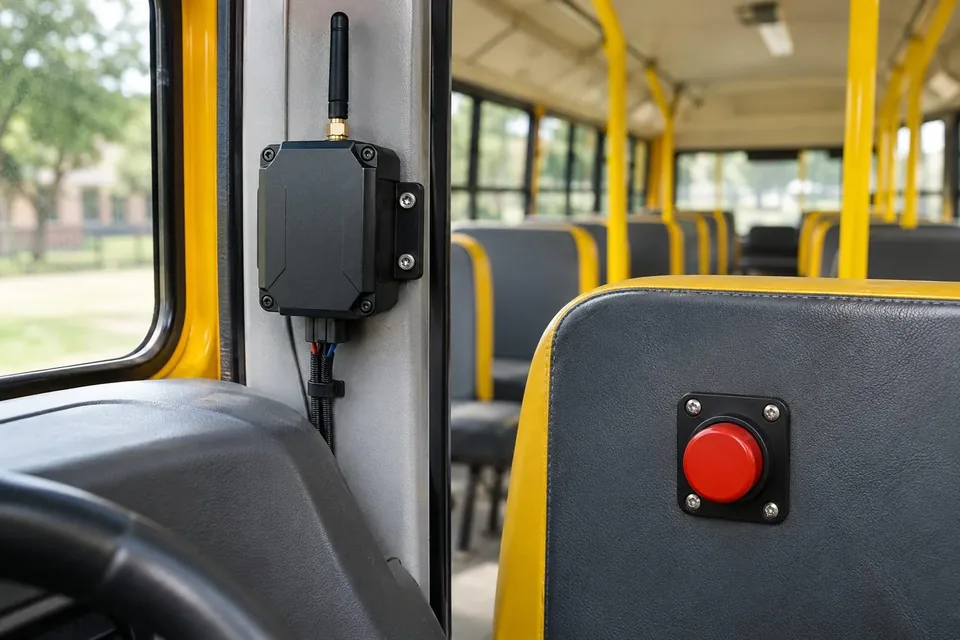
- Alert the school at once, using the SOS or the emergency phone.
- Count the children against the day's boarding list. Keep them together, seated if possible, away from traffic.
- Do not hand any child to anyone until the school confirms who is authorised.
At school (incident lead)
- Name one incident lead, normally the principal or transport manager. Everyone else reports to them.
- Send two staff members to the site and, if children are taken to hospital, to the hospital.
- Pull the exact list of children on that bus today, with parent contact numbers.
- Inform the police if the driver has not, and the bus owner or contractor.
- Start a written log: every call, decision and time.
- Inform the insurer, or make sure the owner does.
Road accident victims are entitled to cashless treatment at designated hospitals under the central Cashless Treatment of Road Accident Victims Scheme, 2025, up to Rs 1.5 lakh per victim for the first seven days. Non-designated hospitals provide stabilisation. Staff should not delay treatment over paperwork.
Telling parents: who, how, what to say
Who. One named person speaks to parents. A second person keeps the log of who has been told.
How. Call the parents of any child who is hurt first, by phone, before any group message. Then tell all parents of children on that bus, by call or message. Then, if needed, a short notice to the wider school community.
What to say. Stick to what you know: what happened, where, whether their child is hurt, where their child is now, who is with them, and the one number to call. Do not guess about causes or blame. Do not share other children's names or conditions. Update parents at fixed times, even if there is no news.
Prepare these messages in advance as templates, in English and in the language most of your parents use.
Who is responsible after a school bus accident: school, bus owner, driver
Responsibility after an accident runs on three separate tracks. They overlap, and they are not alternatives.
The driver. Under section 134 of the Motor Vehicles Act, when anyone is injured, the driver must take reasonable steps to get medical attention for the injured, unless a mob or similar danger makes that impossible. The driver must give the police information on demand, or report the accident at the nearest police station as soon as possible and within 24 hours. The driver must also inform the insurer. If the driving was rash or negligent, the driver can face criminal charges.
The bus owner. The owner answers for the vehicle: registration, permit, fitness and insurance. Third-party insurance is compulsory under section 146 of the Act. Compensation claims for injuries are usually made before the Motor Accident Claims Tribunal against the owner, the driver and the insurer.
The school. The 2021 Guidelines on School Safety and Security fix accountability for children's safety, including while they are transported to and from school, on management and the principal. CBSE holds the management and head of school responsible for transport lapses. A school can also face civil claims if it failed in its duty of care, for example by using an unfit bus or an unverified driver.
Owned bus versus hired bus
If the school owns the bus, the school is the owner on all three tracks: it holds the registration and insurance, employs the driver and is accountable for the children.
If the school hires the bus, the contractor is the owner and usually employs the driver. That moves the vehicle and insurance duties to the contractor. It does not move the school's accountability for the children it puts on that bus. CBSE treats hired buses as school buses, and the 2021 guidelines speak of school transport without distinguishing ownership.
So the contract matters. It should require valid insurance, fitness and permits, verified and qualified drivers, an attendant, immediate reporting of any incident, and cooperation with the school's investigation. How liability is shared between school and contractor is a legal question; have your lawyer review the agreement.
Documents and insurance to have ready
Keep a copy of these for every bus, in the office and in digital form:
- Registration certificate, permit and fitness certificate.
- Insurance policy, with the insurer's claim number. Third-party cover is the legal minimum; ask your broker about cover for passengers.
- Pollution under control certificate.
- Speed governor and tracking device certificates.
- Driver's licence, badge, experience proof and police verification; the same for the attendant and conductor.
- The route plan and the list of children assigned to the bus.
- Emergency contacts: school, owner, insurer, nearest hospitals on the route.
Knowing exactly who was on the bus
The question every parent and police officer will ask first is: who was on the bus? An assignment list tells you who should have been on it. It does not tell you who was absent today, who got on at a different stop, or who went home early with a parent.
This is where a scan at boarding earns its place. With BOBOK, each child's QR card is scanned when they board, so the school can see the actual list for that trip in seconds. The driver can also raise an SOS alert from the driver app that reaches the school immediately, so the incident lead knows which bus and where. BOBOK is a technology provider; the school runs the transport and the response.
After the incident: review and reporting
- Report to your education authority and board as their rules require, and keep a copy of what you sent.
- Cooperate with the police investigation and preserve evidence: CCTV footage, tracking data, scan records, the incident log.
- Offer counselling and support to children and staff who were on the bus. The 2021 guidelines cover support and counselling as part of school safety.
- Hold a review within two weeks. Ask what happened, what helped, what slowed you down, and what you will change. Record the answers.
- Update the protocol and retrain staff.
Prevention checklist
- Every driver meets the experience and record rules, and is police-verified.
- Every bus has an attendant, a working speed governor, GPS and CCTV, first aid and fire extinguishers.
- Fitness and insurance are valid, with renewal dates in a shared calendar.
- Boarding is recorded every trip, not assumed.
- The accident protocol is printed in every bus and practised once a term.
- Parent message templates are ready.
Our school bus safety rules checklist has the full list, and parents can use our seven questions about the school bus to check the basics.
What to do next
Print the first-hour list, put it in every bus and walk your drivers and attendants through it this week. Then check that your office can produce today's list of children on each bus in under five minutes. If it cannot, fix that first.
To see how BOBOK's boarding scans and driver SOS work in practice, book a demo.
This article is general information, not legal advice. Liability after an accident depends on the facts; consult your school's legal counsel.
Questions people ask
Who is liable in a school bus accident in India?
Is the school responsible if the bus is hired from a contractor?
What should a school do immediately after a bus accident?
What insurance should a school bus have?
Sources
We build school transport safety software for schools in India. Our guides are researched from official notifications and reviewed before publishing.